
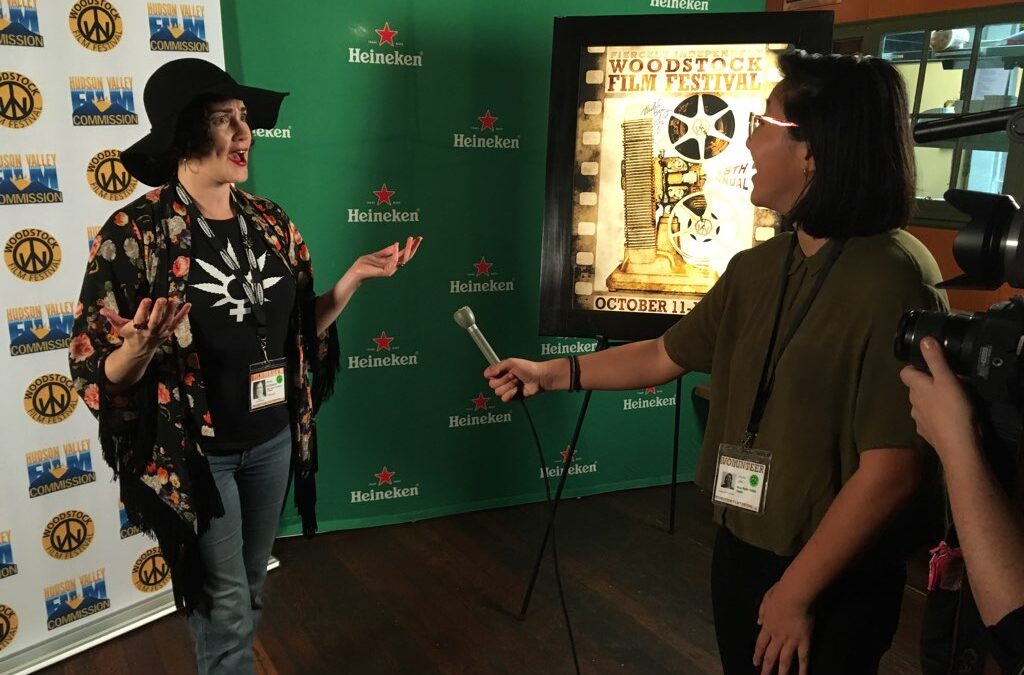
In March 2019, I’m standing in front of a sold-out room in Worcester, Massachusetts, after a screening of Mary Janes: The Women of Weed, my documentary on the women building the first billion-dollar industry not dominated by men. A hand goes up. Someone asks what I think about the state’s cannabis licenses going almost entirely to all-white, male-owned businesses.
I didn’t hesitate.
“Women make up 51 percent of the population, and they make most of the household purchasing decisions, so they’re the ones who should be designing products that fit their own lives. We also know diverse teams perform better. So my advice to those all-male leadership teams: hire women and people of color, and pay them what you’d pay yourselves.”
The room came alive. The audience applauded. The Q&A moderator beamed. One of the dispensary’s all-male owners, who was sponsoring the event, met me offstage afterward and admitted his team had work to do.
Seven Years Earlier, in Ottawa
That’s a complete reversal from the woman onstage in Ottawa in 2012, doing the math in real time and landing on a decent quote that got a polite nod and nothing else.
Seven years later, in Worcester, I wasn’t hedging or running the math. I said the true thing, on the record, to a room full of strangers, with a sponsor standing a few feet away.
That wasn’t a confidence problem I’d finally solved. It was a clarity problem, and the clarity didn’t come out of nowhere.
Clarity Isn’t Improvised
Before I ever got on a plane for that tour, I’d already built the narrative architecture: the thesis of the film, the boundaries around what I would and wouldn’t comment on, the throughline that held no matter which stage I was standing on. I knew exactly what I stood for, and that clarity is what gave me the nerve to hold a boundary and call out what needed calling out, in real time, without building the case for it on the spot.
This isn’t just a filmmaker thing. It’s the same mechanism whether you’re on a stage, on camera, or in a boardroom. Knowing your thesis, your standards, and your boundaries creates a framework you can reach for whenever you need it.
The real distinction: confidence is a feeling you chase before you walk into the room. Clarity is the structure you build before you ever need it. You’re not improvising courage. You’re retrieving it.
What the Architecture Delivered
Here’s what that narrative architecture delivered across the Mary Janes tour.
- Film festivals and screening hosts flew me to town already knowing what to expect. I was going to say the quiet part out loud, even if it meant calling out their sponsors in their own backyard.
- Audiences showed up and stayed for the Q&A.
- Hosts sold out their screenings.
- Press ran the sharp quotes instead of the safe ones.
- And I landed on local newspaper and magazine covers because I’d given them something cover-worthy.
You don’t need a documentary tour to prove this. The same gap shows up in the seconds after a board member asks the question you didn’t prep for, or a client pushes back in a room where you’re the only one who can answer it. Clarity is what makes that moment feel retrievable instead of improvised.
None of that happened because I got braver. It happened because my story was B.R.A.V.E.

More From the Expressive Series
This is Post 2 of 4. Catch up or keep going:
- Post 1: What EXPRESSIVE Means in Leadership (And What It Doesn’t)
- Post 3: How to Turn Your Story Into a Usable Soundbite
- Post 4: What a Signature Story Builds for Women Executives
If you want to run this same diagnostic on your own story before your next high-stakes room, start with the Executive Storytelling Scorecard. It’s built to show you whether you’re missing confidence or missing architecture, and those two problems require completely different fixes.
Frequently Asked Questions
What’s the difference between confidence and clarity in leadership?
Confidence is a feeling you chase before you walk into the room. Clarity is the structure you build before you ever need it, so there’s nothing left to invent live, under pressure, when it counts. Confidence fades under pressure. Clarity holds.
How do you build clarity before a high-stakes conversation?
Build your narrative architecture ahead of time: your thesis (what you actually stand for, in plain language), and your boundary (the question or topic you’re done softening on). Once both are written down, you’re not improvising in the room. You’re retrieving something you already decided.
Why do some executives freeze under pressure even when they’re confident?
Because confidence and clarity solve different problems. A confidence problem shows up as hesitation or a shaking voice. A clarity problem looks calm on the outside, you speak smoothly, but you still don’t say the true thing, because the architecture that makes it safe to say isn’t built yet.
About the Author
Windy Borman is a documentary filmmaker, Narrative Architect, and creator of the B.R.A.V.E. Framework™. After 25+ years on both sides of the camera and the stage, she helps female and non-binary executives build the narrative architecture that gets the real version of their story from the Green Room to the Mic. Her films, including Mary Janes: The Women of Weed and The Eyes of Thailand, have screened at festivals worldwide, and her work has been featured in Variety, the New York Times, the Washington Post, Forbes, NBC, and ABC.



0 Comments