
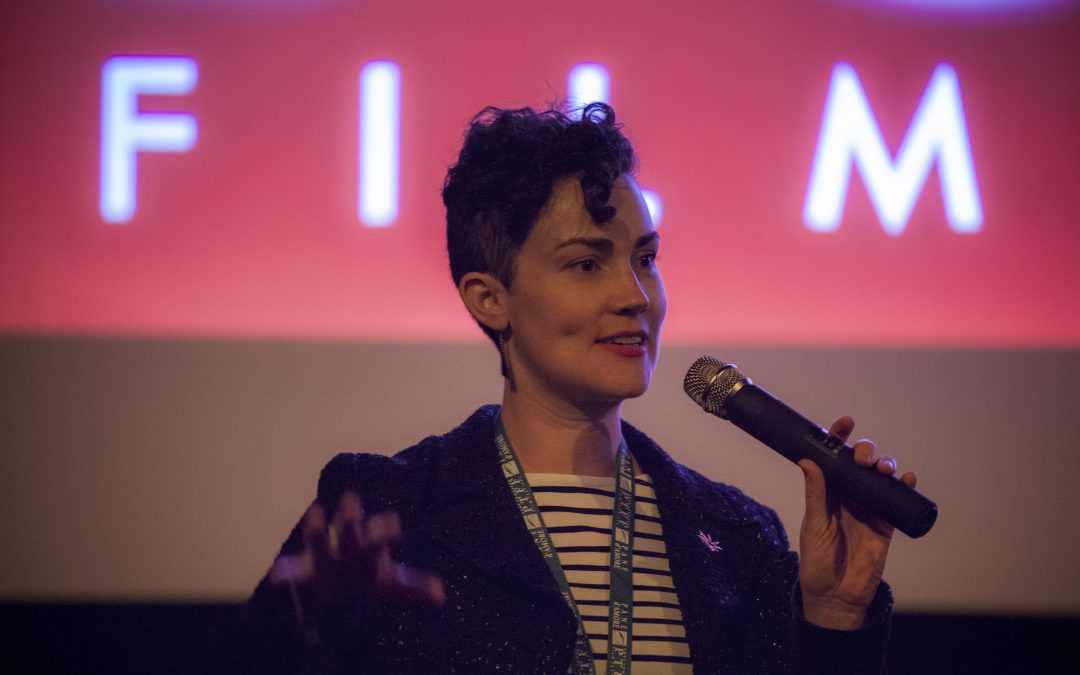
I was sitting onstage at the One World Film Festival in Ottawa, mic in hand, in front of a few hundred people. Mines Action Canada, a longtime supporter of my documentary The Eyes of Thailand, had flown me up from the US, booked me for CBC radio interviews, and arranged this post-screening conversation with a CBC correspondent.
Their focus was banning landmines globally. My focus was the film, which follows one woman’s quest to help two elephant landmine survivors walk again. The journalist onstage latched onto the elephant story instead.
He asked me, more than once, what I thought about elephants living in zoos.
I had more than a hot take. I had a real opinion, built on years of research and interviews: elephants belong in sanctuaries, not zoos, full stop. But that wasn’t the thesis of the film, and it wasn’t the talking point Mines Action Canada had prepped me for when they flew me across the border.
The first time he asked, I answered vaguely. The second time, I said, “I think we humans can learn a lot about our humanity by treating all animals humanely.”
Decent quote. Nice turn of phrase. Got a polite nod from the sponsors.
I didn’t get the room.
It Wasn’t a Confidence Problem
I knew it in real time. Sitting there under the lights, I could feel the sharper answer sitting on the tip of my tongue, and I watched myself trade it for the version that wouldn’t put me at odds with the people who’d flown me there, not because I doubted they believed in me and not because I lacked the answer. I had it. I was doing the math live: my opinion against their sponsorship, my honesty against their goals.
More preparation wouldn’t have fixed that moment, and neither would more confidence. I’d been giving interviews for years by then. I wasn’t nervous and I wasn’t unprepared. What I didn’t have was a structure that let me say the true thing without gambling the room on it.
I’ve sat in enough editing bays to know the difference between a confidence problem and an architecture problem. A confidence problem shows up as hesitation, a shaking voice, silence where an answer should be. That’s not what happened onstage in Ottawa. I spoke clearly and answered smoothly. I just didn’t say the thing I meant.
That’s an architecture problem: the gap between what you think and what makes it out of your mouth when the sponsor, the press, and your own reputation all have skin in the game.
What Expressive Actually Means
This is the fifth and final element of the B.R.A.V.E. Framework™, and it’s the one people misread most often.
Expressive means using colorful language that sounds like yourself.
That’s the whole definition. It doesn’t mean dropping F-bombs for shock value or performing a personality that isn’t yours. It isn’t about being louder, edgier, or more provocative than you actually are. Plenty of executives hear “expressive” and picture something they’re not willing to become, so they opt out of the entire element before they’ve understood it.
What it actually asks for is smaller and harder: your usable soundbite. The sassy, specific, true thing only you can say, instead of the safe quote that gets a nod and nothing else.
Expressive, defined: using colorful language that sounds like yourself. Not louder. Not more provocative. Just true, in your own words.
I hear the resistance before I even finish defining it. “Expressive” sounds like something a lot of my clients trained themselves out of on the way up. They spent a decade learning to sound calm, measured, unshakeable, because somewhere along the way someone told them “emotional” was a synonym for “unprofessional.” So they hear Expressive and brace for a suggestion to loosen up, get bubbly, perform warmth they don’t feel.
That’s not what this is. The B.R.A.V.E. Framework doesn’t ask you to become someone louder. It asks you to stop editing the true thing down to the version that reads as safe. Those are opposite instructions.
I’ve spent 25-plus years on both sides of the camera, deciding what survives the Final Cut and what lands on the Cutting Room Floor. Producers don’t keep the polite non-answer. We keep the moment someone says the true thing, even when it costs them something to say it. That’s not a matter of taste. It’s what actually holds a room, on a stage or on a page.
Swap the CBC mic for the board meeting, the sponsor for the client whose logo is on the slide behind you. The math is the same: your honesty versus their comfort, decided in the three seconds before you speak. You already have the sharper answer. You just haven’t built the architecture that makes it safe to say it.
What the Safe Answer Really Costs
Here’s what that moment in Ottawa could have cost me: the sponsor relationship, if Mines Action Canada had felt undercut on their own stage. The media relationship, if the correspondent had felt handled instead of answered. Maybe the whole partnership, if either side decided I couldn’t be trusted with a live mic.
None of that happened. The sponsors were gracious. The journalist got a usable quote, even if it wasn’t the one he was fishing for. But I didn’t know that outcome while I was deciding what to say. I made the safe choice blind, the way most of us do, and got lucky it didn’t cost me anything that day.
That’s the problem with playing it safe on instinct instead of building the structure ahead of time. Sometimes it works out. It was never built to win the room, and luck runs out eventually, usually in the room that matters most.
The Last Element
Expressive closes out the B.R.A.V.E. Framework™: Bold, Resilient, Active, Vibrant, and Expressive. Each element solves a different piece of the same problem, the gap between the woman who shows up fully in every other room and the version of her who makes it to the mic. Expressive is the one that decides whether what finally comes out of your mouth sounds like you, or like the safest possible version of you.
More From the Expressive Series
This is Post 1 of 4. The series continues with:
- Post 2: Why Executives Mistake Confidence for Clarity — And What It’s Costing Them
- Post 3: How to Turn Your Story Into a Usable Soundbite
- Post 4: What a Signature Story Builds for Women Executives
If you want to catch your own mayonnaise answer before it costs you the room, start with two free diagnostics: the B.R.A.V.E. Checklist and the Executive Storytelling Scorecard. Run them before your next high-stakes conversation, not after.
Frequently Asked Questions
What does “Expressive” mean in the B.R.A.V.E. Framework™?
Expressive means using colorful language that sounds like yourself. It’s the fifth and final element of the B.R.A.V.E. Framework™, and it asks you to say your usable soundbite, the sassy, specific, true thing only you can say, instead of the safe quote that gets a nod and nothing else.
Is Expressive the same thing as confidence?
No. Confidence problems show up as hesitation, a shaking voice, or silence. Expressive problems look different: you speak clearly and answer smoothly, you just don’t say the thing you meant. That’s an architecture problem, not a confidence problem, and it requires a different fix.
Does Expressive mean cursing more or being more dramatic on stage?
No. It doesn’t mean dropping F-bombs for shock value, performing a personality that isn’t yours, or being louder or more provocative than you actually are. It means saying the true, specific thing in your own words instead of editing it down to something safe.
___
About the Author
Windy Borman is a documentary filmmaker, Narrative Architect, and creator of the B.R.A.V.E. Framework™. After 25+ years on both sides of the camera and the stage, she helps female and non-binary executives build the narrative architecture that gets the real version of their story from the Green Room to the Mic. Her films, including Mary Janes: The Women of Weed and The Eyes of Thailand, have screened at festivals worldwide, and her work has been featured in Variety, the New York Times, the Washington Post, Forbes, NBC, and ABC.


0 Comments