The Cutting Room Floor is where your boldest lines go when you edit yourself out of your own story, your own keynote, and your own bio. These five signs tell you whether your real thesis made it into the final cut or whether you replaced it with something safer when nobody was looking.
After 25 years of producing documentary films and coaching female executives, I’ve learned to spot the moment a woman edits herself out of her own story.
It happens fast. Most women don’t even notice it.
Here are five signs it’s happening to you — and what to do about it.
Sign #1: You Deliver the Impressive Version. Not the True One.
You say the thing that sounds right for the room. The polished, professional, Comms-approved version. You hit every talking point. You’re articulate, credible, and completely on-message.
And you drive home knowing the real version was right underneath it the whole time.
The impressive version fills the room. The true version changes it. If you’ve been consistently delivering the former, your boldest line is still on the Cutting Room Floor.
Sign #2: Your Strongest Soundbite Never Makes It Out of the Green Room.
You said the sharp, specific, sassy version to a trusted colleague before the meeting. It made her laugh. She said “you should say that in there.”
You didn’t.
Then you delivered the safe version when it counted. The real one got the laugh. The safe one got polite applause.
The Green Room version — the unfiltered, unmistakably-you version — is almost always the usable soundbite. If it’s consistently staying in the Green Room, it’s time to build the architecture that lets it into the room that matters.
Sign #3: You Cut It Because It Felt Too Specific. Too Personal. Too Much Like You.
That sentence — the one that felt too small, too niche, too revealing — is almost always the one they’d quote.
The usable soundbite isn’t the most impressive thing you could say. It’s the most specific. The one that only you can say because only you have stood exactly where you’ve stood and seen exactly what you’ve seen.
Most women cut their boldest line because it feels too much like just them.
That’s exactly why it works.
Sign #4: You’re Waiting for Permission You Were Never Going to Receive.
The panel invitation. The media request. The keynote offer. The moment someone finally recognizes you’re ready.
That cue isn’t coming — or it’s coming slower than your story deserves.
Bold doesn’t ask for permission. It decides the cue is irrelevant. It shows up at the Kennedy Center, at the keynote stage, at the LinkedIn post draft, and tells the story that needs to be told.
If you’ve been waiting for someone to give you the green light to say the real thing — that’s the sign. The green light was always yours to give.
Sign #5: You Walked Off Stage Thinking “I Got Through It.” Not “Fuck Yeah.”
You were articulate. Professional. Prepared.
And you knew — the whole time — that the bold, specific, unmistakably-you version was right there, waiting.
The gap between “I got through it” and “Fuck yeah. That was exactly who I am” isn’t talent. It isn’t confidence. It’s narrative architecture. The structure that makes it safe — and strategic — to say the real version out loud, every time, on every platform.
If you’re consistently landing on the wrong side of that gap, your architecture needs work.
Frequently Asked Questions
What are the signs your bold message is still on the cutting room floor?
Five signs: you soften your point before it lands, you use someone else’s framework instead of your own, your bio reads like a resume instead of a thesis, you rehearse the bold version but deliver the safe one, and the feedback you get is “that was great” but nobody quotes you afterward. Each one is an architecture problem, not a courage problem.
Why do women executives edit themselves out of their own stories?
Research shows women rate their own performance 15 points lower than men on identical results. The editing happens before the room ever gets a vote. The audience didn’t reject the bold version. The speaker did, because the structure that would make it feel obvious to say out loud wasn’t there yet.
How do I get my boldest line off the cutting room floor?
Write the unedited version of your thesis. The one you’d say at dinner with a close friend after two glasses of wine. Then build the architecture: the context that earns it, the specifics that anchor it, and the structure that holds it on whatever platform you’re standing on. The bold line isn’t new. The container for it is.
What’s the difference between self-editing and strategic editing?
Strategic editing cuts what’s redundant and tightens what stays. Self-editing cuts what’s true and replaces it with what feels safe. The diagnostic: did the edit make the point sharper, or did it sand the edge off? If the edited version is one nobody would argue with, you cut the bold line.
This Isn’t a Confidence Problem. It’s an Architecture Problem.
The bold version of you isn’t missing. She’s just been waiting for the structure that makes it safe to show up in every room — not just the safe ones.
Christine Exley and Judd Kessler at Wharton ran a study that puts a number on it. Roughly 1,500 workers answered 20 questions and scored about the same. Men rated their own performance at 61 out of 100. Women rated theirs at 46. A 15-point gap on identical results. The gap held even when participants were told their actual scores and even when their pay depended on an accurate self-assessment. The bold line was there. The architecture to claim it out loud wasn’t.
That’s the work the B.R.A.V.E. Framework™ does. And it starts with two free diagnostic tools.
- The B.R.A.V.E. Checklist shows you exactly what bold looks like in practice — and the one thing you’ve been editing out of your next appearance. Less than 5 minutes. Free. ► DOWNLOAD THE B.R.A.V.E. CHECKLIST — FREE
- The Executive Storytelling Scorecard shows you where your narrative architecture is holding — and where it’s quietly keeping you off the stages you’ve already earned the right to stand on. Scored across four platforms: keynote, media, panels, and legacy. 15 minutes. Free. ► DOWNLOAD THE EXECUTIVE STORYTELLING SCORECARD — FREE
Further Reading
Want the full definition of BOLD? Read: What BOLD Actually Means in Leadership (And What It Doesn’t)
Ready to explore why the loud model fails? Read: Bold Isn’t Loud: Why Women Leaders Have the Wrong Definition
When the bold line makes the cut, the next question is whether it’s the true version or the impressive one. Read: What a Cannabis Documentary Taught Me About Bold Leadership
About The Author
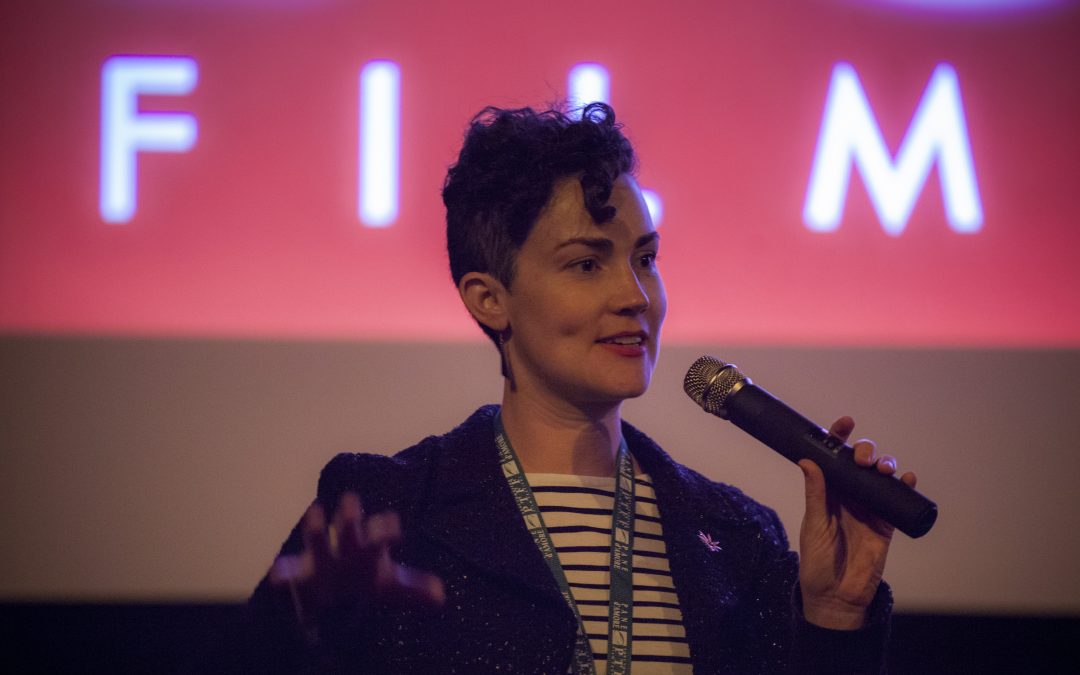
Windy Borman is a documentary filmmaker, Narrative Architect, and founder of WB Consulting LLC. She created the B.R.A.V.E. Framework™ — the narrative architecture system that gets the real version of female and non-binary executives from the Green Room to the mic.



0 Comments